Have you ever experienced pain or swelling at the back of your mouth, especially around your wisdom teeth? One possible reason could be an impacted tooth.
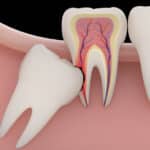
An impacted tooth is a tooth that does not have enough space to come through the gums properly. Wisdom teeth, also known as third molars, are the most commonly impacted teeth. While some impacted teeth may not cause immediate symptoms, they can lead to several dental problems if left untreated.
At Anbu Dental in Madurai, we help patients identify impacted teeth early and recommend the appropriate treatment based on their dental condition.
What Is an Impacted Tooth?
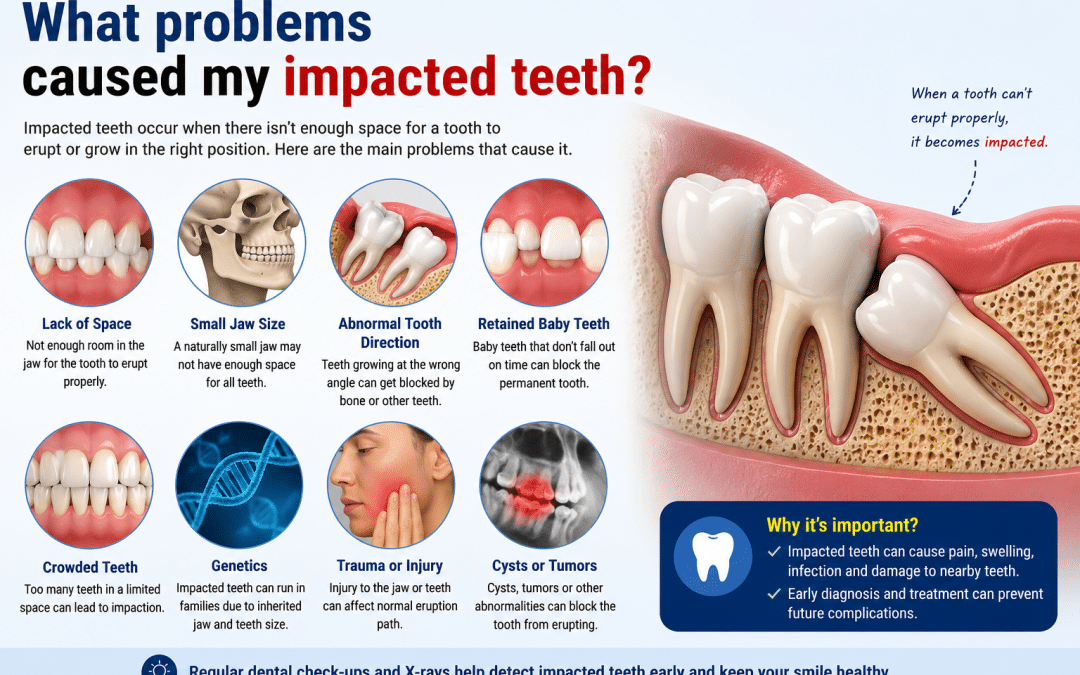
A tooth becomes impacted when it is unable to erupt normally into its proper position. This can happen because there is not enough space in the jaw, the tooth is growing at an unusual angle, or another tooth is blocking its path.
Impacted wisdom teeth are particularly common because they are the last permanent teeth to develop and often do not have enough room to emerge properly.
What Problems Can Impacted Teeth Cause?
1. Pain and Discomfort
An impacted tooth can cause pain or pressure at the back of the jaw. The discomfort may be occasional at first but can become more noticeable when the surrounding tissues become irritated or infected.
2. Swollen or Tender Gums
When a tooth is only partially erupted, food particles and bacteria can become trapped around the gum tissue. This may result in redness, swelling, tenderness, or difficulty cleaning the area.
3. Gum Infection
Partially erupted impacted teeth can create pockets where bacteria accumulate. This can lead to an infection around the tooth, sometimes causing bad breath, unpleasant taste, swelling, or pain.
4. Tooth Decay
Because impacted teeth can be difficult to reach with a toothbrush and dental floss, they may be more susceptible to decay. The neighboring tooth can also be affected if food and bacteria become trapped between the teeth.
5. Damage to Nearby Teeth
An impacted tooth may press against an adjacent tooth. Over time, this pressure can contribute to damage or decay of the neighboring tooth.
6. Cysts Around the Tooth
In some cases, a fluid-filled sac called a cyst can develop around an impacted tooth. Although this is not common, a cyst can affect the surrounding bone or teeth if it becomes large.
7. Difficulty Opening the Mouth
If an impacted tooth becomes infected or the surrounding tissues become significantly swollen, you may experience discomfort or difficulty opening your mouth normally.
8. Bad Breath or Unpleasant Taste
Food and bacteria can collect around a partially erupted tooth, making the area difficult to clean. This can contribute to persistent bad breath or an unpleasant taste in the mouth.
What Are the Signs of an Impacted Tooth?
Some impacted teeth cause no symptoms and are discovered during a routine dental X-ray. However, possible warning signs include:
- Pain or pressure at the back of the mouth
- Swollen or painful gums
- Difficulty chewing
- Bad breath
- An unpleasant taste
- Difficulty opening the mouth
- Swelling around the jaw
- Repeated gum infections near the wisdom tooth
If you experience these symptoms, it is best to have your teeth examined by a dentist rather than waiting for the problem to worsen.
How Is an Impacted Tooth Diagnosed?
Your dentist will examine your teeth and gums and may recommend a dental X-ray. An X-ray can show the position of the impacted tooth and whether it is affecting nearby teeth, bone, or surrounding structures.
Based on the examination and X-ray findings, your dentist can determine whether the tooth needs monitoring, treatment, or removal.
Does Every Impacted Tooth Need to Be Removed?
Not necessarily. If an impacted tooth is not causing problems and is unlikely to create future complications, your dentist may recommend regular monitoring.
However, removal may be considered when an impacted tooth causes repeated infections, significant pain, tooth decay, damage to neighboring teeth, or other dental complications.
The appropriate treatment depends on the position of the tooth and your overall oral health.
When Should You Visit a Dentist?
Do not ignore recurring pain or swelling at the back of your mouth. Early evaluation can help identify an impacted tooth and prevent potential complications.
If you are experiencing wisdom tooth pain or other symptoms of an impacted tooth, Anbu Dental in Madurai can evaluate your condition and guide you toward the appropriate treatment.
Take Care of Your Oral Health with Anbu Dental, Madurai
Impacted teeth may not always cause symptoms, but they can sometimes lead to pain, infection, decay, and problems with nearby teeth. A dental examination and X-ray can help determine the condition of the tooth and whether treatment is required.
If you are experiencing wisdom tooth pain, swelling, or repeated gum infections, schedule a dental consultation at Anbu Dental, Madurai. Early diagnosis can help you protect your oral health and avoid unnecessary complications.