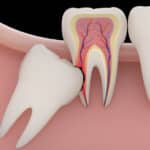
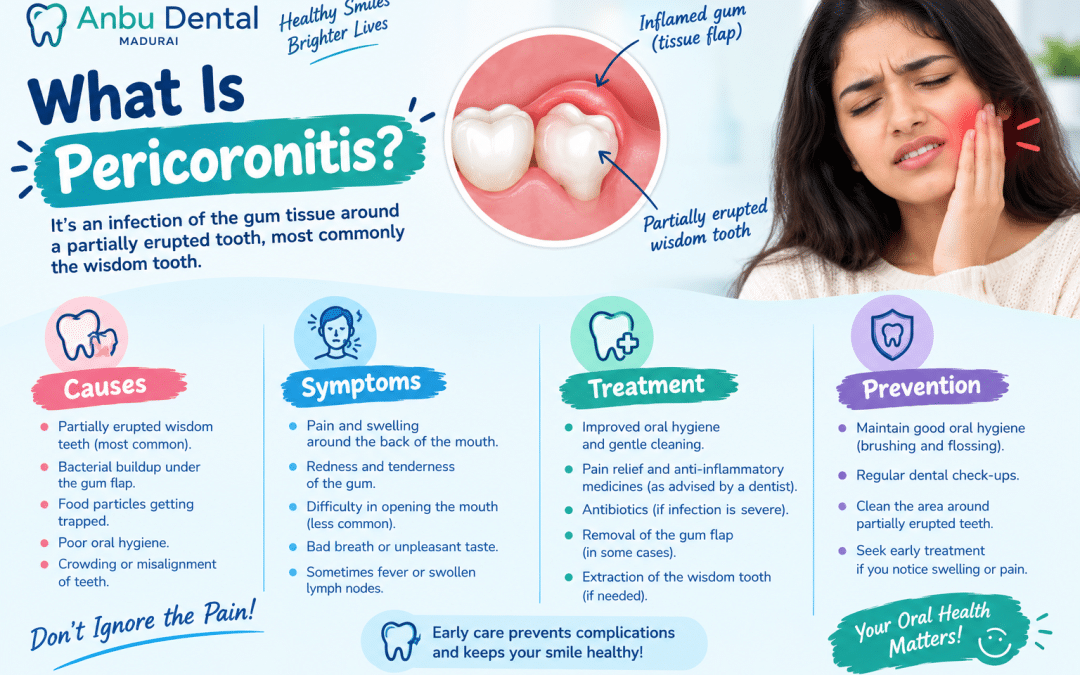
Pericoronitis is an inflammation of the gum tissue surrounding a partially erupted tooth, most commonly a wisdom tooth at the back of the mouth. It occurs when food particles and bacteria become trapped beneath the gum flap covering the partially emerged tooth, leading to irritation, swelling, and sometimes infection.
At Anbu Dental, Madurai, we encourage patients to seek timely dental care for wisdom tooth pain and gum swelling to prevent complications and maintain good oral health.
What Causes Pericoronitis?
Pericoronitis commonly develops when a wisdom tooth does not fully emerge through the gums. The gum tissue partially covering the tooth can create a pocket where bacteria and food debris accumulate.
Common causes include:
- Partially erupted wisdom teeth: These create spaces where food and bacteria can collect.
- Poor oral hygiene: Difficulty cleaning the back of the mouth can increase bacterial buildup.
- Food impaction: Food particles trapped beneath the gum flap can irritate the surrounding tissue.
- Limited space for wisdom teeth: Crowding or an unfavourable tooth position may interfere with normal eruption.
- Reduced resistance during illness or stress: Some patients may experience flare-ups when their general health or oral hygiene deteriorates.
What Are the Symptoms of Pericoronitis?
The symptoms can range from mild gum irritation to a more severe infection.
Common symptoms include:
- Pain around the partially erupted wisdom tooth
- Redness and swelling of the surrounding gums
- Tenderness while chewing
- Bad breath or an unpleasant taste in the mouth
- Difficulty opening the mouth in more severe cases
- Pus or discharge from beneath the gum flap
- Swelling that may extend towards the cheek or jaw
In more severe cases, patients may develop fever, swollen lymph nodes, or difficulty swallowing. These symptoms require prompt medical or dental assessment.
How Is Pericoronitis Diagnosed?
A dentist will examine the affected gum tissue and wisdom tooth to identify signs of inflammation or infection. The dentist may also recommend a dental X-ray to assess the tooth’s position, eruption pattern, and surrounding structures.
An accurate diagnosis helps determine whether local treatment, further management of the wisdom tooth, or additional investigation is required.
What Are the Treatment Options for Pericoronitis?
Treatment depends on the severity of the condition and whether it is a first episode or a recurring problem.
- Cleaning the Affected Area
The dentist may gently clean and irrigate the space beneath the gum flap to remove trapped food debris and bacteria. This helps reduce inflammation and discomfort.
- Maintaining Proper Oral Hygiene
Patients may be advised to gently clean the affected area using a soft-bristled toothbrush. Warm salt-water rinses may help keep the area clean while awaiting dental treatment.
- Medication When Necessary
Pain-relieving medication may be recommended according to the patient’s medical history. Antibiotics are not routinely needed for every case; a dentist may prescribe them when there is evidence of spreading infection or systemic involvement.
- Removal of the Gum Flap
In selected cases, a dentist may recommend removing the excess gum tissue covering the tooth. This procedure is known as an operculectomy and may help prevent food and bacteria from becoming trapped.
- Wisdom Tooth Removal
If the wisdom tooth is impacted, poorly positioned, or associated with repeated episodes of pericoronitis, extraction may be recommended after appropriate assessment. The best option depends on the tooth’s position, the severity of the condition, and the patient’s overall oral health.
Important: Difficulty breathing or swallowing, rapidly increasing facial or neck swelling, or significant difficulty opening the mouth requires urgent medical attention.
How Can Pericoronitis Be Prevented?
Although not every case can be prevented, good oral hygiene and early dental care can reduce the risk of inflammation.
- Brush twice daily with fluoride toothpaste.
- Clean the back teeth carefully, especially around partially erupted wisdom teeth.
- Follow your dentist’s advice on cleaning difficult-to-reach areas.
- Attend regular dental check-ups.
- Seek dental advice if you notice recurring pain, swelling, or food getting trapped around a wisdom tooth.
When Should You Visit a Dentist?
Do not ignore persistent wisdom tooth pain, swollen gums, pus, or a bad taste in your mouth. Early treatment can help relieve discomfort and reduce the risk of complications.
If you have fever, spreading swelling, or worsening pain, seek prompt dental care. Difficulty breathing or swallowing is an emergency.
Pericoronitis Treatment at Anbu Dental, Madurai
At Anbu Dental, Madurai, we provide dental evaluation and treatment planning for wisdom tooth pain, swollen gums, and other oral health concerns. Our team can assess the affected tooth, identify the cause of inflammation, and recommend appropriate treatment based on your individual needs.
If you are experiencing pain or swelling around a partially erupted wisdom tooth, schedule a dental consultation for timely evaluation.
Take care of your oral health with timely dental attention at Anbu Dental, Madurai.
Frequently Asked Questions (FAQs)
- Is pericoronitis serious?
Mild pericoronitis may be treated with professional cleaning and appropriate home care. However, untreated or severe infection can spread to nearby tissues and requires prompt treatment.
- Can pericoronitis go away on its own?
Symptoms may temporarily improve, but the underlying gum flap or tooth-position problem may remain. A dental examination can help prevent recurrence and identify the appropriate treatment.
- Does pericoronitis always require wisdom tooth removal?
No. Some cases respond to cleaning and local treatment. Extraction may be recommended when episodes recur or the wisdom tooth’s position makes further problems likely.
- How long does pericoronitis take to heal?
Recovery depends on the severity of inflammation and the treatment provided. Mild cases may improve within a few days after appropriate care, while more severe infections may take longer.
- Can pericoronitis cause bad breath?
Yes. Trapped food debris and bacterial buildup beneath the gum flap can cause an unpleasant taste and bad breath.
- Can I treat pericoronitis at home?
Gentle cleaning and warm salt-water rinses may help with temporary comfort, but they do not replace dental treatment. Do not attempt to cut or remove the gum flap yourself.
Book a dental consultation at Anbu Dental, Madurai, if you experience wisdom tooth pain, gum swelling, or symptoms of pericoronitis.