A small cavity may not seem like a serious problem. You may have no pain, no swelling, and no difficulty eating. So, it can be tempting to put off visiting the dentist.
However, a cavity does not usually heal on its own. Without timely treatment, tooth decay can gradually progress deeper into the tooth and may eventually lead to infection, severe pain, or even tooth loss.
At Anbu Dental, Madurai, we encourage patients to address cavities early—when treatment is usually simpler and more comfortable.
What Is a Dental Cavity?
A cavity, also called tooth decay, is a damaged area of the tooth caused by acids produced by bacteria in dental plaque.
When you regularly consume sugary or starchy foods, bacteria in your mouth can produce acids that gradually weaken the tooth’s outer layer, called enamel. Over time, this can create a hole or cavity.
In the early stages, tooth decay may not cause noticeable symptoms. That is one reason regular dental check-ups are important.
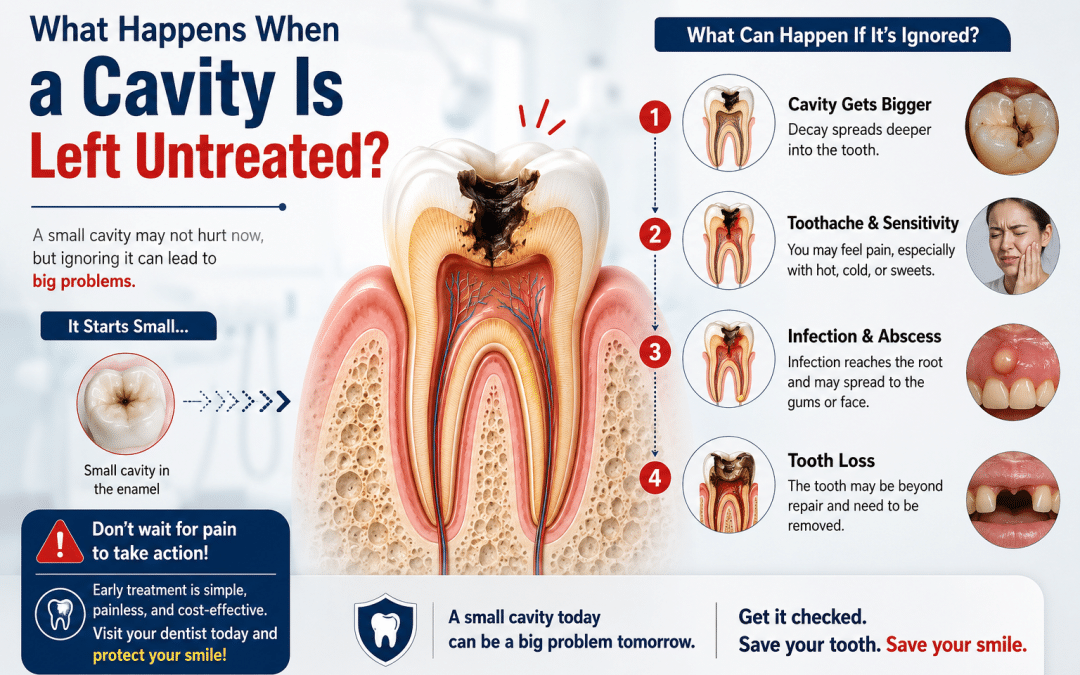
What Happens If a Cavity Is Left Untreated?
1. The Cavity Can Get Bigger
A cavity generally doesn’t stay the same size indefinitely. As decay progresses through the enamel, it can reach the softer layer underneath, called dentin.
At this stage, you may begin to notice:
- Sensitivity to hot or cold foods and drinks
- Sensitivity to sweets
- Food getting stuck in the affected tooth
- Mild toothache
- Visible dark spots or holes
The earlier a cavity is detected, the easier it is generally to manage.
2. Tooth Sensitivity May Increase
As decay moves closer to the inner part of the tooth, sensitivity can become more noticeable.
You might experience a sharp sensation when having:
- Ice cream or cold drinks
- Hot tea or coffee
- Sweets
- Very acidic foods
Some people may ignore this sensitivity, assuming it will go away. However, persistent or worsening sensitivity can be a reason to have the tooth examined by a dentist.
3. The Decay Can Reach the Tooth’s Pulp
Deep inside the tooth is the pulp, which contains nerves and blood vessels.
If decay reaches the pulp, the tooth can become inflamed or infected. This may cause:
- Persistent toothache
- Throbbing pain
- Increased sensitivity
- Pain when biting or chewing
- Pain that may become worse at night
At this stage, a simple filling may no longer be sufficient. Depending on the condition of the tooth, root canal treatment may be recommended to remove the infected pulp and preserve the tooth.
4. An Infection Can Develop
When bacteria reach the pulp and surrounding tissues, an infection or dental abscess can develop.
Possible signs include:
- Swelling around the tooth or face
- Severe toothache
- Pus around the tooth or gums
- Bad taste in the mouth
- Fever in some cases
- Difficulty opening the mouth
A dental infection should not be ignored. If you develop significant facial swelling, fever, or difficulty swallowing or breathing, seek urgent medical attention.
5. The Tooth May Become Weaker
As decay destroys more of the tooth structure, the tooth can become fragile.
A severely weakened tooth may chip or break while eating. In some cases, there may not be enough healthy tooth structure remaining for a simple restoration.
Depending on the extent of damage, treatment could involve a filling, crown, root canal treatment, or other restorative options.
6. You May Eventually Lose the Tooth
If a cavity becomes severely advanced and the tooth cannot be successfully restored, extraction may sometimes be necessary.
Losing a tooth can affect more than your smile. Missing teeth can make chewing more difficult and may affect the position of neighbouring teeth over time.
That is why treating tooth decay early is generally preferable to waiting until the tooth becomes painful.
Can a Cavity Go Away on Its Own?
An established cavity usually does not disappear on its own.
Very early enamel changes caused by mineral loss may sometimes be slowed or reversed through good oral hygiene, fluoride exposure, and appropriate dietary habits. But once a physical hole has formed in the tooth, professional dental treatment is typically needed.
A dentist can examine the tooth and determine the appropriate treatment based on how far the decay has progressed.
Why Does a Cavity Sometimes Not Hurt?
One of the most important things to remember is that the absence of pain does not necessarily mean the tooth is healthy.
Cavities can develop gradually without noticeable symptoms. Pain may appear only when decay has progressed deeper into the tooth.
This is why regular dental examinations can help identify problems before they become more complicated.
How Can You Prevent Cavities?
A few everyday habits can help reduce your risk of tooth decay:
- Brush your teeth twice a day with fluoride toothpaste.
- Clean between your teeth regularly using floss or another suitable interdental cleaner.
- Limit frequent consumption of sugary foods and drinks.
- Drink water regularly.
- Avoid constantly snacking throughout the day.
- Visit your dentist for regular check-ups.
- Have dental problems evaluated early rather than waiting for pain.
When Should You See a Dentist?
Consider scheduling a dental examination if you notice:
- A visible hole or dark spot on a tooth
- Persistent tooth sensitivity
- Toothache
- Pain while chewing
- Food repeatedly getting trapped in one area
- Swollen or bleeding gums
- A broken or chipped tooth
- Bad taste or discharge around a tooth
And remember: you don’t have to wait until you have pain to visit a dentist.
Takeaway
A cavity may begin as a small problem, but untreated tooth decay can gradually progress from the enamel to deeper layers of the tooth, potentially resulting in pain, infection, extensive treatment, or tooth loss.
Early detection can often mean simpler treatment.
If you suspect you have a cavity or haven’t had a dental check-up recently, consider getting your teeth examined by a dental professional.
Protect Your Smile with Timely Dental Care
At Anbu Dental, Madurai, our dental team focuses on helping patients maintain healthy teeth and gums through preventive care, early diagnosis, and appropriate treatment.
Don’t wait for a small cavity to become a big dental problem. Schedule a dental consultation and take care of your smile today.