Maintaining good oral hygiene is essential for keeping your teeth and gums healthy. Brushing twice a day and flossing regularly are the foundation of a healthy mouth, but adding mouthwash to your daily oral care routine can provide additional benefits.
Mouthwash can help reduce bacteria, freshen breath, and reach areas that may be difficult to clean with a toothbrush. However, using it correctly is important to get the most benefit from your routine.
What Is Mouthwash?
Mouthwash, also called an oral rinse, is a liquid product used to rinse the mouth. Depending on its ingredients, it may help control plaque, reduce bacteria, prevent cavities, support gum health, or provide temporary relief from bad breath.
Different mouthwashes are designed for different purposes, so choosing one based on your oral health needs is important.
Benefits of Using Mouthwash
Regular use of an appropriate mouthwash can complement your brushing and flossing routine.
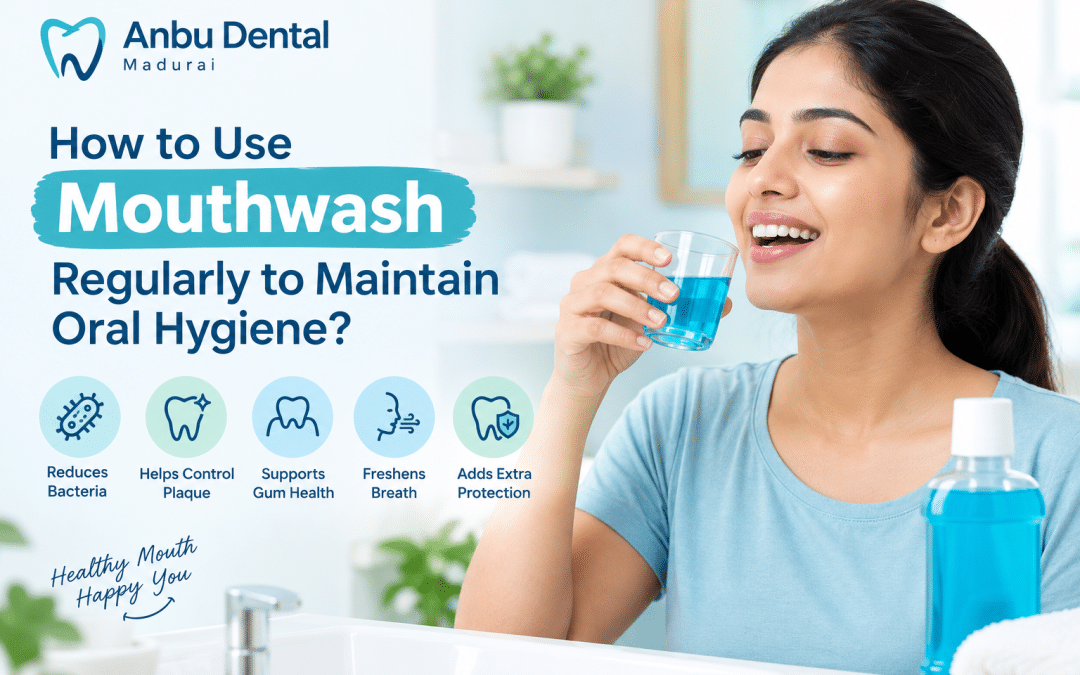
- Helps Reduce Oral Bacteria
Some mouthwashes contain antibacterial ingredients that can help reduce bacteria in the mouth and support overall oral hygiene.
- Helps Control Plaque
Mouthwash can help reduce plaque buildup when used along with proper brushing and flossing.
- Supports Gum Health
Certain therapeutic mouthwashes may help manage bacteria associated with gum problems. If you have bleeding or swollen gums, it is better to consult a dentist rather than relying only on mouthwash.
- Helps Freshen Breath
Mouthwash can temporarily reduce unpleasant mouth odour and leave your breath feeling fresher.
- Provides Additional Protection Against Cavities
Some mouthwashes contain fluoride, which can help strengthen tooth enamel and provide additional protection against tooth decay.
How to Use Mouthwash Correctly?
Follow these simple steps to incorporate mouthwash into your oral hygiene routine:
Step 1: Choose the Right Mouthwash
Select a mouthwash based on your specific needs. Some products are designed for cavity prevention, while others focus on plaque, gum health, or bad breath.
If you have specific dental concerns, ask your dentist which type is suitable for you.
Step 2: Measure the Recommended Amount
Pour the amount recommended on the product label into a cup or the measuring cap provided. Avoid using more than the recommended quantity.
Step 3: Rinse Your Mouth
Swish the mouthwash around your mouth thoroughly. Make sure it reaches the teeth, gums, and other areas of the mouth.
Step 4: Gargle if Appropriate
If the product instructions allow it, gently gargle to help the rinse reach the back of your mouth. Do not swallow the mouthwash.
Step 5: Spit It Out
After rinsing for the recommended duration mentioned on the product label, spit the mouthwash out completely.
Step 6: Follow the Product Instructions
Avoid eating or drinking immediately after using certain mouthwashes if the product instructions recommend waiting. Always follow the directions provided with the specific mouthwash.
Should You Use Mouthwash Before or After Brushing?
The answer can depend on the type of mouthwash and its ingredients. In some cases, using mouthwash immediately after brushing may wash away the concentrated fluoride from toothpaste.
Therefore, follow the instructions on your mouthwash and toothpaste, or ask your dentist about the most suitable routine for you.
For many people, using mouthwash at a separate time from brushing can be a practical option.
Is Mouthwash a Replacement for Brushing and Flossing?
No.
Mouthwash should be considered an addition to your oral hygiene routine, not a replacement for brushing or flossing.
A good daily routine generally includes:
- Brushing your teeth twice a day with fluoride toothpaste
- Cleaning between your teeth regularly with floss or an appropriate interdental cleaner
- Using mouthwash when appropriate
- Drinking enough water
- Limiting frequent sugary foods and drinks
- Visiting your dentist regularly
Can Everyone Use Mouthwash?
Not necessarily. Some mouthwashes may not be suitable for young children or people with certain oral health conditions.
Children should only use mouthwash when recommended or appropriate for their age, and they should be able to rinse and spit without swallowing it.
People with gum disease, persistent bad breath, dry mouth, frequent cavities, or other dental concerns may benefit from a dentist-recommended mouthwash rather than choosing one randomly.
Common Mistakes to Avoid When Using Mouthwash
Avoid these common mistakes:
- Swallowing mouthwash
- Using more than the recommended amount
- Using mouthwash as a substitute for brushing
- Using a medicated mouthwash for longer than recommended
- Ignoring persistent bad breath or gum bleeding
- Giving mouthwash to young children without appropriate guidance
If you experience persistent gum bleeding, tooth pain, mouth sores, or bad breath, schedule a dental examination to identify the underlying cause.
How Often Should You Use Mouthwash?
The recommended frequency depends on the type of mouthwash and your individual oral health needs. Some products are intended for daily use, while certain therapeutic mouthwashes may be prescribed for a specific period.
Always follow the product instructions or your dentist’s recommendation rather than assuming that more frequent use provides greater benefits.
Maintain Your Oral Health with Professional Dental Care
Mouthwash can be a useful addition to your daily oral hygiene routine, but it works best when combined with regular brushing, cleaning between the teeth, healthy food habits, and professional dental care.
If you are unsure which mouthwash is suitable for you or have concerns such as bleeding gums, bad breath, tooth sensitivity, or recurring cavities, consult a dental professional.
At Anbu Dental, Madurai, our dental team can assess your oral health and provide personalized guidance to help you maintain healthy teeth and gums.
Takeaway
Using mouthwash correctly can complement your daily oral hygiene routine. Choose the right product, follow the recommended amount and duration, and never use mouthwash as a replacement for brushing and interdental cleaning. For the best results, combine good daily habits with regular dental check-ups.
Anbu Dental – Supporting Your Smile with Comprehensive Dental Care in Madurai.