Healthy gums are an important part of a healthy smile. But when your gums become red, swollen, tender, or start bleeding, it may be a sign of gum disease (periodontal disease).
Gum disease is common and can develop gradually, sometimes without causing significant pain in the early stages. Recognising the warning signs and seeking dental care at the right time can help prevent the condition from becoming more serious.
At Anbu Dental, Madurai, we encourage patients to pay attention to changes in their gums and get professional advice whenever something doesn’t feel right.
What Is Gum Disease?
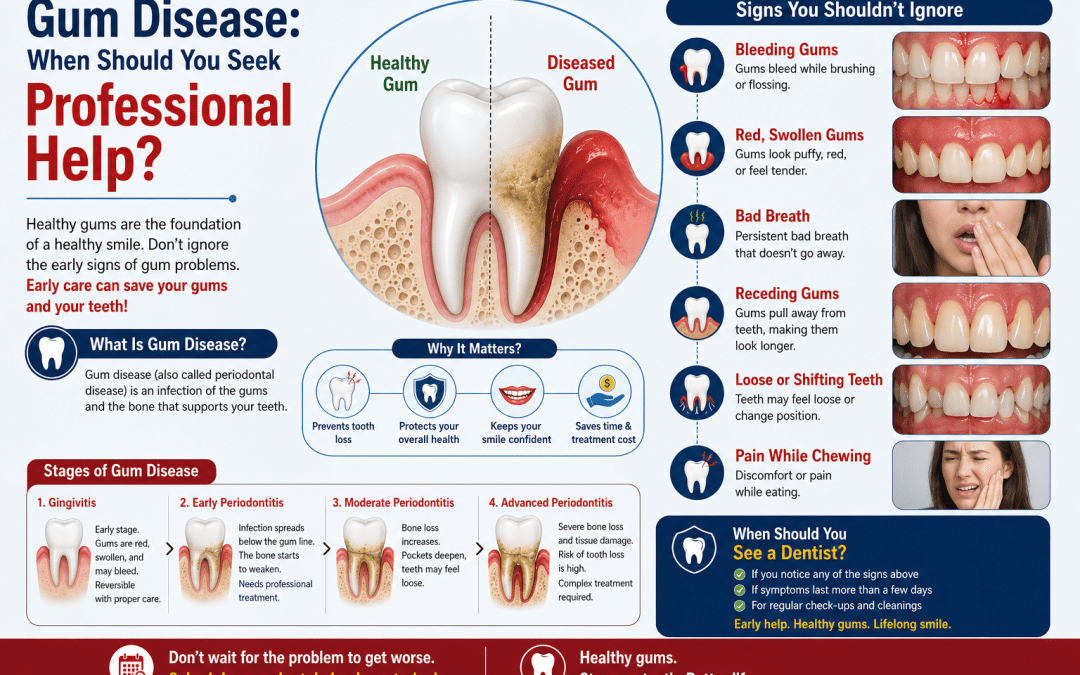
Gum disease is an infection and inflammation of the tissues that support your teeth. It is commonly associated with the buildup of plaque, a sticky layer of bacteria that forms on the teeth.
In its early stage, gum disease is known as gingivitis. If left untreated, it can progress to periodontitis, which can damage the tissues and bone supporting your teeth.
The good news is that gum disease can often be prevented, managed, and treated effectively when identified early.
Common Signs of Gum Disease
You should pay attention to changes in your gums, even if they are not painful.
Some common warning signs include:
- Bleeding gums, particularly while brushing or flossing
- Red, swollen, or tender gums
- Persistent bad breath or an unpleasant taste in the mouth
- Gums that appear to be pulling away from the teeth
- Loose or shifting teeth
- Increased sensitivity around the gums or teeth
- Changes in the way your teeth fit together when you bite
- Pus or discharge around the gums
- Food getting trapped between your teeth more frequently
Having one or more of these symptoms doesn’t necessarily mean you have advanced gum disease, but it is worth getting your gums checked by a dentist.
When Should You See a Dentist for Gum Problems?
- Your Gums Bleed Regularly
Occasional bleeding can happen if you brush too hard or haven’t flossed for a while. However, regular gum bleeding shouldn’t be ignored.
If your gums frequently bleed when brushing, flossing, or eating, schedule a dental examination. Persistent bleeding can be an early sign of gum inflammation.
- Your Gums Are Red or Swollen
Healthy gums are generally firm and pink. If your gums remain red, puffy, swollen, or tender, it may indicate inflammation or infection.
A dentist can examine your gums and determine the underlying cause.
- You Have Persistent Bad Breath
Bad breath that continues despite regular brushing, tongue cleaning, and mouth care may sometimes be related to bacteria and gum disease.
If persistent bad breath is accompanied by bleeding or swollen gums, a dental check-up is particularly important.
- Your Teeth Feel Loose
Adult teeth should not become loose without a reason.
Loose teeth can be a sign that the structures supporting the teeth have been affected. Don’t wait for the tooth to become painful before seeking help. Early evaluation may help protect the supporting tissues and improve the chances of saving the tooth.
- Your Gums Are Receding
If your teeth appear longer than they used to or you notice more of the tooth near the gumline, your gums may be receding.
Gum recession can have several causes, including gum disease and aggressive brushing. A dental examination can help identify the cause and determine appropriate treatment.
- You Notice Pus, Severe Swelling, or Significant Pain
Pus around a tooth or gum, significant swelling, or severe dental pain may indicate an infection that needs prompt professional assessment.
If swelling is spreading to your face or neck, or you have difficulty breathing or swallowing, seek urgent medical or dental care.
Can Gum Disease Be Treated?
Yes. Treatment depends on the stage and severity of the condition.
For early gum inflammation, professional cleaning combined with improved daily oral hygiene may be sufficient. More advanced gum disease may require deeper cleaning below the gumline and other periodontal treatments.
Your dentist will examine your gums and teeth and recommend treatment based on your individual needs.
Why Early Treatment Matters
Ignoring gum problems because they are painless can allow the condition to progress.
Untreated periodontal disease can lead to:
- Gum recession
- Damage to the tissues supporting your teeth
- Bone loss around the teeth
- Loose teeth
- Tooth loss
- Persistent bad breath
Regular dental check-ups can help identify gum problems before they become more difficult to manage.
How Can You Keep Your Gums Healthy?
Good daily habits can reduce your risk of gum disease:
- Brush your teeth twice a day with a fluoride toothpaste.
- Clean between your teeth daily using floss or another suitable interdental cleaning method.
- Clean your tongue regularly.
- Avoid tobacco and smoking.
- Maintain a balanced diet and limit frequent sugary snacks and drinks.
- Don’t ignore persistent bleeding, swelling, or other changes in your gums.
- Visit your dentist regularly for professional examination and cleaning when recommended.
When Is It Time to Seek Help?
A simple rule is: if your gums repeatedly bleed, swell, hurt, recede, or change in appearance, it’s time to talk to a dentist.
You don’t need to wait until you have severe pain. Gum disease can develop quietly, and an early dental examination may help detect problems before they become more advanced.
Take Care of Your Gums with Anbu Dental, Madurai
Your gums deserve as much attention as your teeth. If you are experiencing bleeding gums, swelling, persistent bad breath, gum recession, loose teeth, or other changes in your oral health, consider getting a professional dental evaluation.
At Anbu Dental, Madurai, our dental team can assess your gum health, identify potential problems, and guide you towards appropriate treatment and preventive care.
Don’t ignore the early signs of gum disease. A timely dental check-up can help protect your gums, teeth, and smile.
Looking for dental care in Madurai? Contact Anbu Dental to schedule an appointment.