A healthy smile starts with good oral hygiene—but brushing and flossing are not the only things that matter. What you eat also plays an important role in maintaining healthy teeth and gums. A balanced diet can help strengthen your teeth, support healthy gums, and reduce the risk of dental problems such as cavities, gum disease, and tooth sensitivity.
Choosing nutritious foods and limiting sugary or acidic foods can be an important part of your daily oral care routine.
How Does Food Affect Your Oral Health?
Every time you eat, the bacteria in your mouth interact with carbohydrates and sugars from food. This process can produce acids that attack the tooth enamel and increase the risk of cavities.
Frequent consumption of sugary snacks, soft drinks, sweets, and sticky foods can increase acid exposure and contribute to tooth decay.
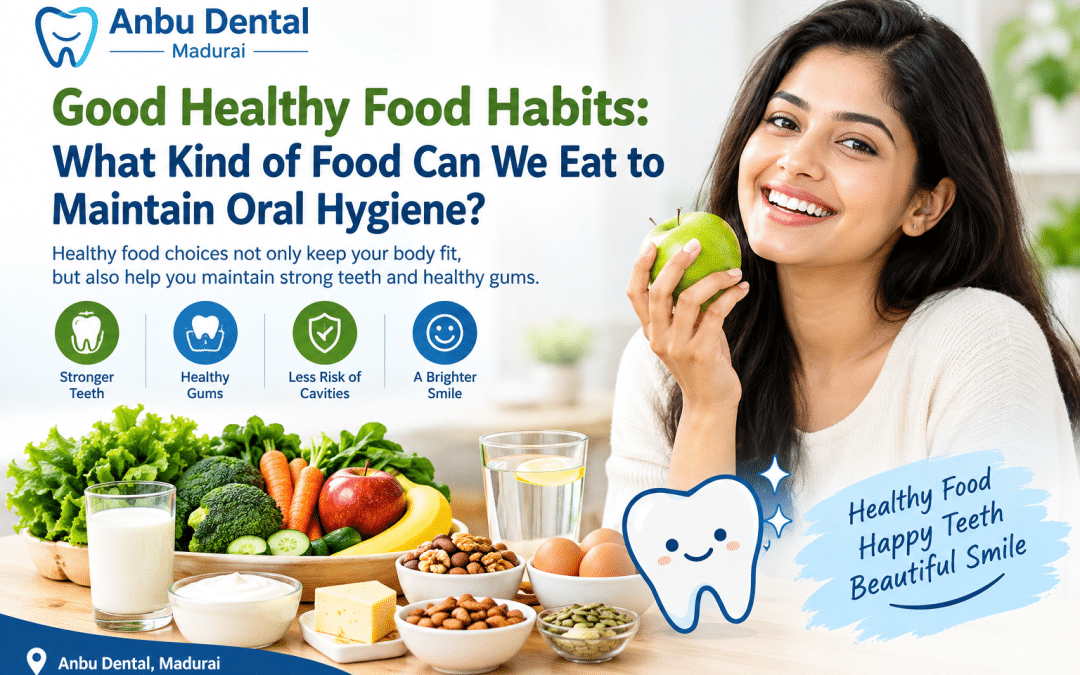
On the other hand, foods rich in calcium, phosphorus, vitamins, fibre, and water can support your teeth and gums.
Best Foods for Healthy Teeth and Gums
- Milk and Other Dairy Products
Milk, curd, paneer, and other dairy products are good sources of calcium and phosphorus, which are important for maintaining strong teeth and bones.
Dairy products can also help support the natural protection of tooth enamel.
Try:
- Milk
- Unsweetened curd
- Paneer
- Cheese in moderation
- Crunchy Fruits and Vegetables
Fruits and vegetables such as apples, carrots, cucumber, and other fibre-rich foods require chewing, which can stimulate saliva production.
Saliva helps wash away food particles and naturally helps protect your teeth from acids.
Try:
- Apples
- Carrots
- Cucumber
- Guava
- Pears
- Leafy Green Vegetables
Spinach, drumstick leaves, broccoli, and other green vegetables contain important vitamins and minerals that contribute to overall health, including oral health.
Adding a variety of vegetables to your meals can help you maintain a balanced diet.
- Nuts and Seeds
Nuts and seeds provide nutrients such as protein and minerals. Unsalted options can be a healthier snack choice than sugary or sticky snacks.
Try:
- Almonds
- Walnuts
- Sesame seeds
- Pumpkin seeds
Remember to chew carefully, particularly if you have sensitive teeth, dental restorations, or braces.
- Eggs and Protein-Rich Foods
Eggs and other nutritious protein sources provide essential nutrients needed for maintaining overall health. A balanced diet that includes adequate protein can support healthy teeth and gums.
- Water – The Best Drink for Your Teeth
Water is one of the simplest choices for maintaining good oral hygiene.
Drinking water throughout the day can help rinse away food particles and keep your mouth hydrated. Choosing water instead of sugary beverages can also reduce your teeth’s exposure to sugar and acids.
Foods and Drinks to Limit for Better Oral Health
While you don’t necessarily have to completely avoid every treat, frequent consumption of certain foods can increase the risk of dental problems.
Limit:
- Sweets and chocolates
- Cakes and biscuits
- Sugary snacks
- Soft drinks and carbonated beverages
- Sweetened fruit juices
- Sticky candies
- Frequent snacking between meals
- Highly acidic foods and drinks
If you consume sugary or acidic foods, having them with a meal rather than frequently throughout the day can help reduce repeated acid attacks on your teeth.
Healthy Food Habits for Strong Teeth
Following a few simple habits can make a difference to your oral health:
- Choose nutritious, balanced meals.
- Drink plenty of water throughout the day.
- Reduce frequent sugary snacks.
- Choose fresh fruits and vegetables as snacks.
- Limit sugary and carbonated drinks.
- Avoid constantly sipping sweetened beverages.
- Rinse your mouth with water after eating when brushing is not possible.
- Brush your teeth twice a day with fluoride toothpaste.
- Clean between your teeth regularly using floss or an appropriate interdental cleaner.
- Visit your dentist regularly for dental check-ups.
Is Eating Healthy Enough to Keep Your Teeth Clean?
Not completely. A healthy diet supports your oral health, but it does not replace proper dental hygiene.
For good oral hygiene, combine healthy eating habits with regular brushing, cleaning between your teeth, and professional dental check-ups. Your dentist can also identify early signs of cavities, gum problems, enamel wear, and other dental conditions.
When Should You Visit a Dentist?
If you experience symptoms such as tooth pain, bleeding gums, persistent bad breath, tooth sensitivity, swelling, or a loose tooth, consult a dentist rather than relying only on dietary changes.
Regular dental check-ups can help detect problems early and maintain healthy teeth and gums.
Maintain Your Smile with Anbu Dental, Madurai
At Anbu Dental, Madurai, we focus on helping patients maintain healthy teeth and gums through preventive dental care and appropriate treatment.
Whether you need a routine dental check-up, teeth cleaning, cavity treatment, root canal treatment, dental implants, Invisalign, or cosmetic dental care, professional guidance can help you maintain your oral health.
Remember: A healthy smile begins with good daily habits. Eat well, stay hydrated, maintain proper oral hygiene, and visit your dentist regularly.
Frequently Asked Questions
- What foods are best for healthy teeth?
Milk, curd, cheese, leafy vegetables, crunchy vegetables, fruits, nuts, seeds, eggs, and other nutritious foods can be part of a balanced diet that supports oral health. - Is fruit good for your teeth?
Many fruits provide fibre and important nutrients. However, some fruits are naturally acidic or contain sugars, so maintaining good oral hygiene and avoiding frequent snacking is important. - Is water good for oral health?
Yes. Water helps keep the mouth hydrated and can help rinse away food particles. Choosing water instead of sugary drinks can also reduce sugar exposure to your teeth. - Which foods should I avoid for healthy teeth?
Try to limit frequent consumption of sweets, sticky candies, sugary drinks, cakes, biscuits, and other foods high in added sugar.
5. How often should I visit a dentist?
The appropriate frequency depends on your individual oral health. Your dentist can recommend a suitable check-up schedule based on your dental needs.