Brushing your teeth twice a day is one of the simplest and most important habits for maintaining good oral health. But are you brushing your teeth properly?
Many people brush every day but may unknowingly use too much pressure, miss certain areas, brush for too little time, or use an incorrect technique. Over time, these habits can contribute to plaque buildup, gum problems, tooth sensitivity, and tooth decay.
At Anbu Dental, Madurai, we believe that good oral health starts with the basics. Learning the correct brushing technique can help keep your teeth and gums clean and support a healthy smile.
Why Is Proper Brushing Important?
Your teeth constantly accumulate a sticky layer of bacteria called plaque. If plaque isn’t removed regularly, it can contribute to tooth decay and gum disease.
Proper brushing helps remove plaque, food particles, and bacteria from the surfaces of your teeth and along the gumline.
However, effective brushing isn’t simply about moving a toothbrush back and forth. How you brush matters.
How to Brush Your Teeth Properly
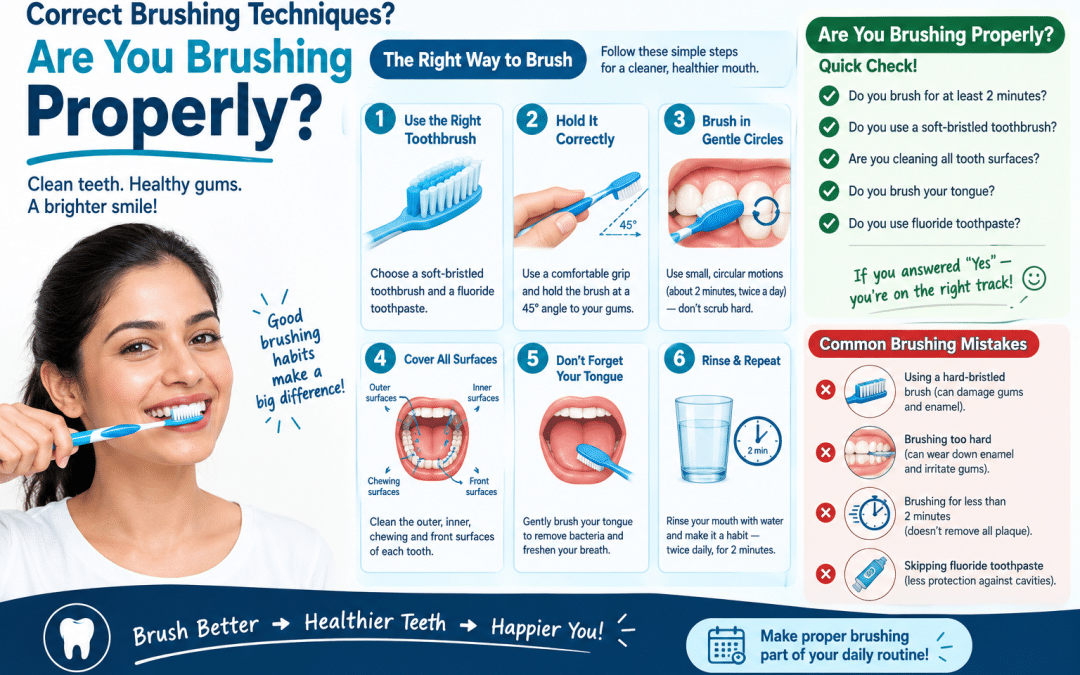
Follow these simple steps for a better brushing routine.
- Choose the Right Toothbrush
Use a toothbrush with soft bristles that is comfortable to hold and suitable for the size of your mouth.
A soft-bristled toothbrush can clean effectively without requiring excessive pressure. If you are unsure which toothbrush is appropriate for you, your dentist can provide personalised advice.
Replace your toothbrush or toothbrush head approximately every three to four months, or sooner if the bristles become frayed.
- Use the Right Amount of Toothpaste
Use a fluoride toothpaste appropriate for your age and dental needs.
For adults, a small amount of toothpaste is generally sufficient. Children may require different amounts depending on their age, so parents should follow their dentist’s recommendations.
- Hold the Brush at the Correct Angle
Place the toothbrush at approximately a 45-degree angle towards the gumline.
This position helps clean the area where the teeth and gums meet — an area where plaque can easily accumulate.
- Use Gentle, Short Strokes
Move the toothbrush using gentle, controlled strokes.
Avoid aggressive scrubbing. Brushing harder doesn’t necessarily make your teeth cleaner and excessive force may contribute to gum irritation or tooth wear.
Instead, focus on cleaning each area carefully.
- Clean the Outer Surfaces
Start by cleaning the outer surfaces of your upper and lower teeth.
Use small, gentle movements and gradually work your way around the mouth. Avoid rushing through the process.
- Clean the Inner Surfaces
The inner surfaces of the teeth are easy to overlook, especially the teeth at the back of the mouth.
Spend enough time cleaning these areas using gentle strokes.
- Don’t Forget the Chewing Surfaces
Brush the chewing surfaces of your back teeth carefully. These areas contain grooves and pits where food particles and plaque can collect.
- Clean the Front Teeth Vertically
For the inner surfaces of your front teeth, hold the toothbrush vertically and use gentle up-and-down strokes.
This can make it easier to reach these narrower surfaces.
- Brush Your Tongue
Your tongue can also harbour bacteria and contribute to bad breath.
Gently brush your tongue or use a tongue cleaner as part of your daily oral hygiene routine.
How Long Should You Brush Your Teeth?
A good general target is about two minutes, twice a day.
Many people underestimate how quickly they brush. Spending enough time on each section of the mouth helps ensure that you don’t consistently miss the same areas.
You can divide your mouth into four sections and spend roughly 30 seconds on each section.
Is Brushing Harder Better?
No.
One of the most common brushing mistakes is using excessive force.
You don’t need to scrub your teeth aggressively to remove plaque. Excessive pressure may irritate the gums and contribute to wear of the tooth surface over time.
Think gentle and thorough, rather than hard and fast.
If your toothbrush bristles flatten or spread out quickly, you may be applying too much pressure.
Common Tooth-Brushing Mistakes to Avoid
Even people who brush twice every day can make mistakes.
Brushing for Less Than Two Minutes
A quick 30-second brushing session may not adequately clean all areas of your mouth.
Using Too Much Pressure
Aggressive brushing can be counterproductive. Use gentle pressure and let the bristles do the cleaning.
Ignoring the Gumline
Plaque can accumulate where the teeth meet the gums. Make sure your brushing technique reaches this area gently.
Forgetting the Back Teeth
The molars are easy to miss because they are located at the back of the mouth. Pay particular attention to these teeth.
Using a Worn-Out Toothbrush
Frayed bristles are less effective at cleaning. Replace your toothbrush or brush head regularly.
Brushing Only the Teeth You Can See
The inner surfaces and chewing surfaces require just as much attention as the visible front surfaces.
Brushing Once a Day
Brushing twice daily is generally recommended for maintaining good oral hygiene.
Should You Floss Before or After Brushing?
Brushing cleans many surfaces of your teeth, but a toothbrush cannot effectively clean the spaces between all teeth.
Cleaning between the teeth using dental floss or another appropriate interdental cleaning method can help remove plaque and food debris from these areas.
The important thing is to make interdental cleaning a consistent part of your oral hygiene routine. Your dentist can recommend the most suitable method depending on your teeth and gums.
What About Electric Toothbrushes?
An electric toothbrush can be a useful option for maintaining oral hygiene. Some models include features such as timers and pressure sensors that can help improve brushing habits.
However, the technique still matters. An electric toothbrush doesn’t automatically guarantee better brushing if areas are consistently missed or excessive pressure is used.
If you’re considering switching to an electric toothbrush, your dentist can help you choose and use one appropriately.
When Should You Visit a Dentist?
Good brushing habits are essential, but brushing alone doesn’t replace professional dental care.
Consider visiting a dentist if you notice:
- Bleeding gums while brushing or flossing
- Persistent bad breath
- Tooth sensitivity
- Toothache or dental pain
- Swollen or painful gums
- Loose or damaged teeth
- Visible cavities or dark spots on teeth
- Plaque or tartar that doesn’t come away with brushing
Regular dental check-ups can also help identify problems before they become more serious.
Correct Brushing Technique: A Simple Daily Routine
For a healthy oral-care routine, remember:
Brush twice a day + use gentle technique + clean the gumline + clean between teeth + replace your toothbrush regularly + visit your dentist for routine check-ups.
Small improvements in your daily brushing habits can make a meaningful difference to your long-term oral health.
Get Expert Dental Care in Madurai
Wondering whether you’re brushing your teeth correctly? Or are you experiencing bleeding gums, sensitivity, bad breath, or recurring dental problems?
At Anbu Dental, Madurai, our dental team can assess your oral health and provide personalised guidance on brushing, gum care, preventive dentistry, and other dental treatments based on your individual needs.
A healthy smile starts with the right daily habits. Learn the correct brushing technique today and give your teeth and gums the care they deserve.
Frequently Asked Questions
- How many times should I brush my teeth?
For most people, brushing twice a day with fluoride toothpaste is recommended.
- How long should I brush my teeth?
Aim to brush for approximately two minutes each time.
- Is it okay to brush my teeth hard?
No. Gentle pressure is preferable. Brushing too aggressively can irritate the gums and contribute to tooth wear.
- What type of toothbrush is best?
A toothbrush with soft bristles is generally a good choice. The ideal toothbrush may vary depending on your individual dental needs.
- Can proper brushing prevent cavities?
Regular and effective brushing with fluoride toothpaste can help reduce the risk of tooth decay, but it does not eliminate the need for a balanced diet, interdental cleaning, and regular dental check-ups.
- Why do my gums bleed when I brush?
Bleeding gums can have several causes, including plaque-related gum inflammation. If bleeding is frequent or persistent, consult a dentist for an evaluation.
- Where can I get dental care in Madurai?
If you’re looking for professional dental care in Madurai, you can consult Anbu Dental for oral health assessment, preventive care, and appropriate dental treatment.
Disclaimer
This blog is intended for general educational purposes and does not replace professional dental advice, diagnosis, or treatment. If you have persistent dental pain, bleeding gums, swelling, or other oral health concerns, consult a qualified dentist.