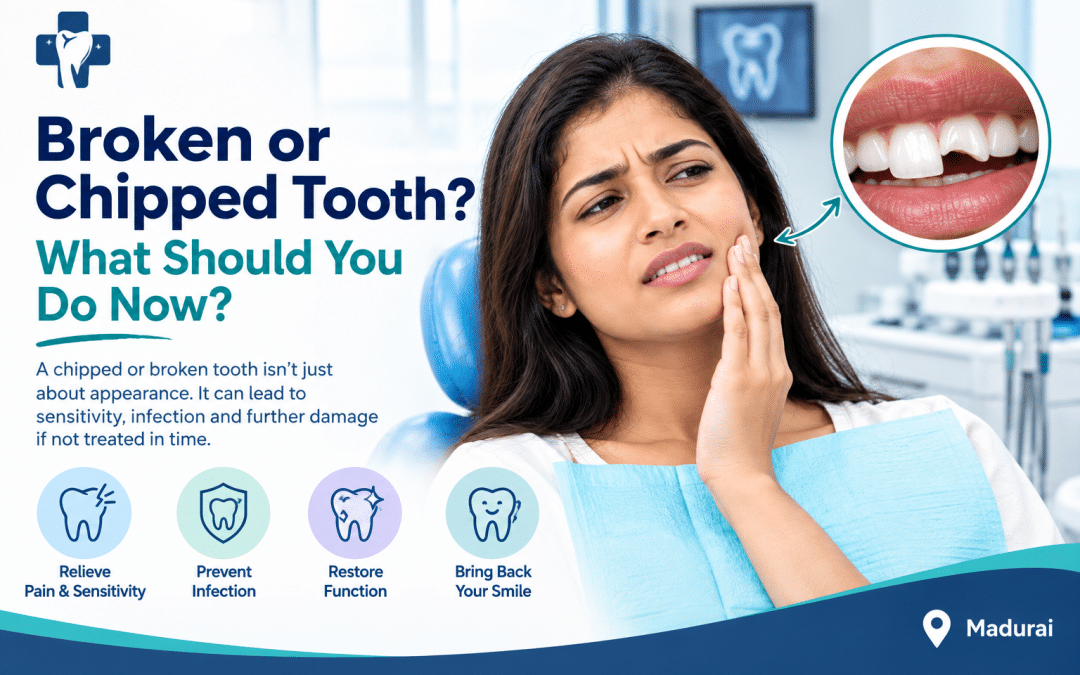
A broken or chipped tooth can happen unexpectedly—while eating something hard, playing sports, due to an accidental injury, or even because of an underlying dental problem. Although a small chip may not always cause pain, it is important not to ignore it.
If you have a broken or chipped tooth in Madurai, getting it examined by a dentist can help prevent further damage and protect your natural tooth.
What Causes a Tooth to Chip or Break?
Teeth can become chipped or fractured for several reasons, including:
- Biting down on hard foods or objects
- Accidental falls or sports injuries
- Tooth decay that weakens the tooth
- Large or old fillings
- Teeth grinding or clenching
- Age-related wear and tear
- Previous dental treatment
Sometimes, a tooth may break even without significant pain. This can happen when the tooth has already been weakened by decay or an existing crack.
What Should You Do If Your Tooth Breaks or Chips?
- Stay Calm
First, don’t panic. If there is no severe bleeding or injury, try to remain calm and protect the affected tooth until you can see a dentist.
- Rinse Your Mouth
Gently rinse your mouth with clean, lukewarm water. This can help remove food particles and keep the area clean.
- Save the Broken Piece
If you can find the broken piece of your tooth, keep it safely in a clean container. Take it with you when you visit the dentist. In some situations, the dentist may be able to use it as part of the treatment.
- Avoid Chewing on That Side
Try not to bite or chew with the damaged tooth. Hard, crunchy, or sticky foods can make the fracture worse.
- Protect Sharp Edges
A chipped tooth can sometimes have a sharp edge that irritates your tongue or cheek. Avoid touching or repeatedly rubbing the area. If necessary, dental wax can temporarily help protect the soft tissues until you receive professional care.
- Visit a Dentist
Even if the tooth doesn’t hurt, it is a good idea to have it examined. A dentist can determine whether the damage is limited to the enamel or whether the deeper layers of the tooth are affected.
Can a Chipped Tooth Heal on Its Own?
Unlike bones, tooth enamel cannot naturally grow back. A very small chip may not require extensive treatment, but the damaged area should still be evaluated by a dentist.
Depending on the severity and location of the chip, your dentist may recommend:
- Dental bonding for minor chips
- Tooth reshaping or polishing for small, uncomplicated chips
- Dental veneers when appropriate for cosmetic concerns
- Dental crowns when a significant portion of the tooth is damaged
- Root canal treatment if the tooth’s pulp or nerve is affected
The appropriate treatment depends on the condition of the tooth and should be decided after a dental examination.
What If a Broken Tooth Is Painful?
Pain may indicate that the fracture has reached deeper layers of the tooth. You may also experience sensitivity to hot or cold foods and drinks.
If you have significant pain, swelling, bleeding, or a tooth that has become loose after an injury, seek dental attention promptly.
A severely damaged tooth may require restorative treatment or, in some cases, root canal treatment to preserve the natural tooth.
Is a Broken Tooth a Dental Emergency?
Not every chipped tooth is an emergency, but some situations require prompt dental attention.
Seek urgent dental care if you experience:
- Severe or persistent tooth pain
- Significant swelling
- Uncontrolled bleeding
- A major portion of the tooth has broken off
- A tooth has become very loose or displaced
- Facial or jaw injury along with the broken tooth
- Difficulty opening your mouth or swallowing
Early evaluation can help prevent the problem from becoming more complicated.
How Can You Prevent Chipped or Broken Teeth?
While accidents cannot always be prevented, you can reduce your risk by:
- Avoiding chewing ice and very hard foods
- Not using your teeth to open packages or bottles
- Wearing a mouthguard during contact sports
- Treating cavities before they weaken the tooth
- Addressing teeth grinding or clenching
- Maintaining regular dental check-ups
- Following good daily oral hygiene
Take Care of Your Broken or Chipped Tooth at Anbu Dental
A chipped or broken tooth should never be ignored, even when there is little or no pain. A timely dental examination can help identify the extent of the damage and determine the most suitable treatment.
At Anbu Dental, Madurai, our team focuses on providing comfortable and personalized dental care based on each patient’s needs. Whether you have a minor chip, a fractured tooth, or a more extensive dental injury, a professional evaluation is the first step toward protecting your oral health.
Have you chipped or broken a tooth? Schedule a dental consultation at Anbu Dental, Madurai, and get your tooth checked before the damage gets worse.
Frequently Asked Questions
- Can a small chipped tooth be left untreated?
Even a small chip should ideally be examined by a dentist. Some chips may only require minor treatment, while others may have deeper damage that is not immediately visible. - What should I eat after breaking a tooth?
Choose softer foods and avoid chewing on the affected side. Avoid hard, crunchy, and sticky foods until your tooth has been examined. - Does a broken tooth always need a crown?
No. Treatment depends on how much of the tooth is damaged. A minor chip may need only bonding or reshaping, while a more severely damaged tooth may require a crown or other treatment. - Can a dentist save a badly broken tooth?
In many cases, a damaged tooth can be restored. The treatment depends on the location and extent of the fracture and whether the tooth’s nerve has been affected. - Should I see a dentist if my chipped tooth doesn’t hurt?
Yes. Lack of pain does not necessarily mean there is no underlying damage. A dental examination can help determine the condition of the tooth.