A healthy smile is not just about having straight teeth; the way your upper and lower teeth fit together also plays an important role in your oral health. One common dental alignment problem is called a crossbite. It can affect children as well as adults and may lead to uneven tooth wear, jaw discomfort, and difficulty chewing if left untreated.
At Anbu Dental Clinic, Madurai, we believe that understanding dental problems is the first step towards maintaining a healthy and confident smile. Let’s understand what a crossbite is, its causes, symptoms, and available treatment options.
What Is a Crossbite?
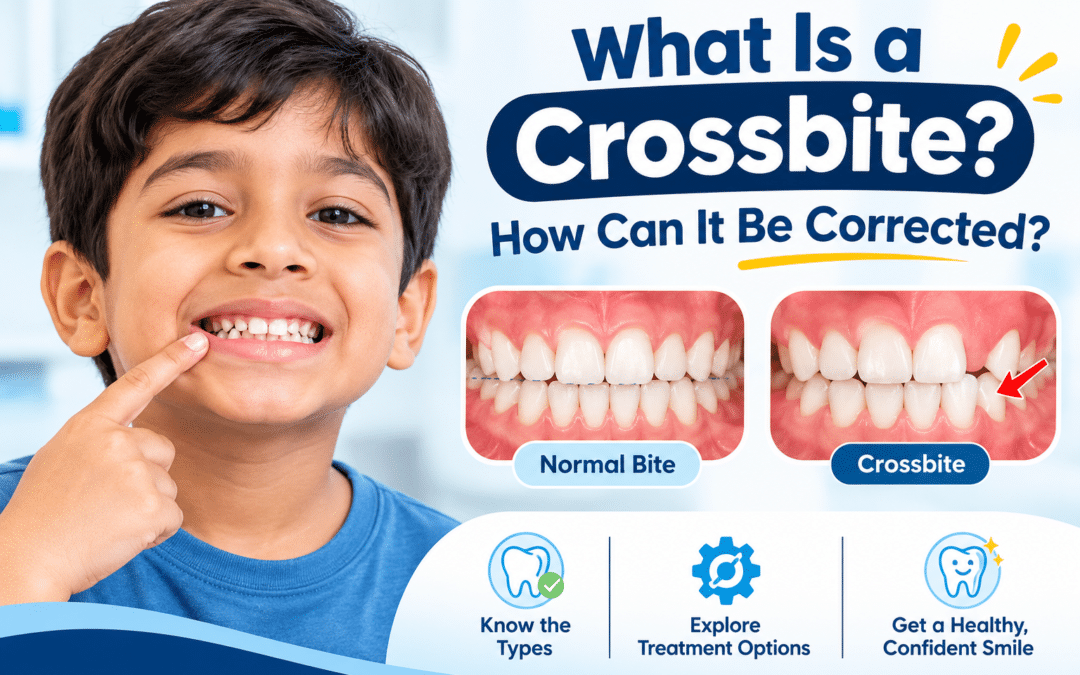
A crossbite is a type of dental misalignment in which one or more upper teeth sit inside the lower teeth instead of slightly outside them when you bite down.
Normally, the upper teeth should overlap the lower teeth slightly. When this relationship is reversed in certain areas, it is known as a crossbite.
Crossbites can affect the front teeth, back teeth, or both.
What Are the Different Types of Crossbite?
There are two major types of crossbite:
- Anterior Crossbite
An anterior crossbite occurs when one or more upper front teeth sit behind the lower front teeth. It may look similar to an underbite in some cases and can affect the appearance of your smile.
- Posterior Crossbite
A posterior crossbite occurs when the upper back teeth sit inside the lower back teeth. It can affect one side or both sides of the mouth and may cause uneven chewing patterns.
What Causes a Crossbite?
Several factors can contribute to the development of a crossbite, including:
- Genetics: Inherited differences in jaw size and shape can affect how the teeth fit together.
- Jaw Development: Uneven growth of the upper or lower jaw may result in bite problems.
- Delayed or Abnormal Tooth Eruption: Teeth that erupt in the wrong position can contribute to crossbite.
- Childhood Habits: Prolonged thumb sucking, pacifier use, or tongue-thrusting habits may influence dental development.
- Crowded Teeth: Insufficient space in the dental arch can cause teeth to erupt in an incorrect position.
What Are the Symptoms of a Crossbite?
Some people may not experience noticeable symptoms, while others may develop:
- Difficulty biting or chewing food.
- Uneven tooth wear.
- Jaw discomfort or pain.
- Teeth appearing misaligned.
- Shifting of the jaw while closing the mouth.
- Facial asymmetry in certain cases.
- Gum irritation or recession around affected teeth.
If you notice any of these signs, consult a dentist for a proper dental examination.
How Can a Crossbite Be Corrected?
The treatment for a crossbite depends on the patient’s age, the severity of the condition, and whether the problem is related to tooth positioning or jaw development.
Here are some commonly recommended treatment options:
- Braces Treatment
Traditional braces use brackets and wires to gradually move teeth into their correct positions. They are commonly used to correct both anterior and posterior crossbites.
- Clear Aligners
Clear aligners are removable, transparent trays that gradually move teeth into better alignment. They may be suitable for selected mild to moderate crossbite cases, depending on the complexity of the bite problem.
- Palatal Expanders
In growing children, a palatal expander may be recommended to widen a narrow upper jaw and create sufficient space for proper tooth alignment. Early treatment can help guide jaw development.
- Dental Appliances
Certain removable or fixed orthodontic appliances can help correct specific crossbite problems, particularly in children.
- Surgical Correction
In severe cases involving significant jaw-size or skeletal discrepancies, orthodontic treatment combined with corrective jaw surgery may be recommended.
Can a Crossbite Be Corrected in Adults?
Yes! Crossbite correction is possible in adults too. Braces and clear aligners can correct many dental crossbites. However, if the condition is caused by a significant jaw discrepancy, additional treatment may be required.
An orthodontic evaluation will help determine the most appropriate treatment plan.
Why Is Early Crossbite Treatment Important?
Identifying and correcting a crossbite at an early stage can help:
- Improve the alignment of teeth.
- Support balanced jaw development in children.
- Reduce uneven pressure on teeth.
- Improve chewing function.
- Prevent certain bite-related dental complications.
- Enhance smile appearance and confidence.
Not every crossbite requires immediate treatment, but an early dental assessment helps identify the right time and approach.
Get Your Crossbite Evaluated at Anbu Dental Clinic, Madurai
A crossbite may seem like a minor alignment issue, but it can affect your bite, tooth health, and overall oral function. The right treatment can improve dental alignment and support a healthier smile.
At Anbu Dental Clinic, Madurai, we focus on identifying dental alignment concerns and guiding patients towards suitable treatment options based on their individual needs.
If you or your child have misaligned teeth or an uneven bite, schedule a dental consultation to understand the available correction options.
A properly aligned bite is an important part of a healthy, confident smile!