A bright, healthy smile plays an important role in our confidence and appearance. However, many people notice that their teeth gradually become yellow, brown, grey, or develop dark spots over time. Changes in teeth colour are common and can happen due to several reasons, including food habits, ageing, poor oral hygiene, and certain dental conditions.
But have you ever wondered why your teeth change colour even when you brush regularly?
At Anbu Dental Clinic, Madurai, we believe that understanding the causes of tooth discolouration is the first step towards maintaining a healthy and beautiful smile. Let’s explore the common reasons behind changes in teeth colour and the available treatment options.
What Is Tooth Discolouration?
Tooth discolouration refers to any change in the natural colour of your teeth. Healthy teeth are not always perfectly white. Their natural shade can range from light yellow to slightly greyish white.
When teeth develop unusual stains, dark patches, or a noticeable change in colour, it may indicate external staining or an underlying dental problem.
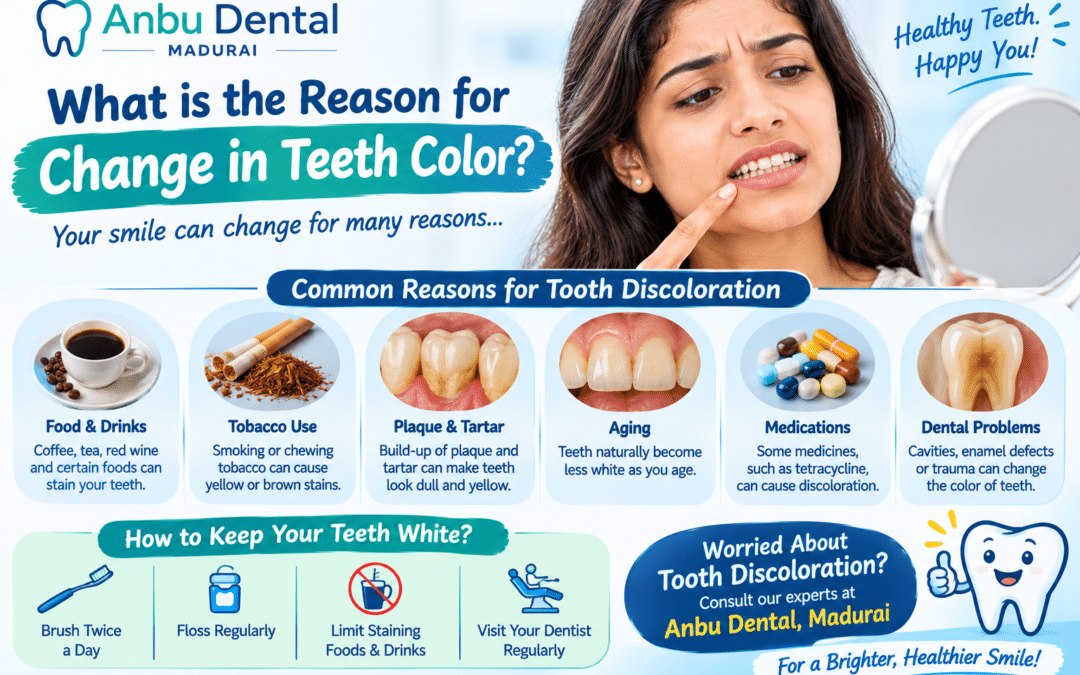
Common Reasons for Changes in Teeth Colour
- Food and Beverages
Certain foods and drinks contain pigments that can gradually stain the outer surface of your teeth.
Common examples include:
- Coffee and tea
- Red wine
- Cola and other dark-coloured beverages
- Turmeric-rich foods
- Berries and coloured sauces
Frequent consumption of these foods and drinks may cause yellow or brown stains on your teeth.
- Poor Oral Hygiene
Not brushing and flossing properly can lead to plaque accumulation on your teeth. Over time, plaque can harden into tartar, which may cause yellowish or brownish discolouration.
Maintaining proper oral hygiene helps prevent plaque buildup and keeps your teeth clean.
- Ageing
As we grow older, the outer enamel layer of our teeth gradually becomes thinner due to natural wear. The underlying dentin, which has a naturally yellowish colour, becomes more visible.
This is one of the common reasons why teeth appear more yellow with age.
- Smoking and Tobacco Use
Smoking cigarettes and chewing tobacco can cause stubborn yellow or brown stains on teeth.
Tobacco contains substances that attach to the tooth surface and gradually cause noticeable discolouration. It can also increase the risk of gum disease and oral cancer.
- Certain Medications
Some medications may affect tooth colour, particularly when teeth are developing.
For example:
- Certain antibiotics, such as tetracycline, may cause intrinsic tooth discolouration.
- Excessive fluoride exposure during tooth development can lead to dental fluorosis, which may cause white patches or brown staining.
- Some medical treatments may also affect tooth appearance.
If you notice sudden changes in tooth colour after starting medication, consult your dentist.
- Dental Trauma or Injury
An accident or injury to a tooth can damage its internal tissues and blood supply. This may cause the affected tooth to turn grey, brown, or darker than the surrounding teeth.
A discoloured tooth following an injury should be examined by a dentist, even if there is no pain.
- Tooth Decay
Tooth decay can cause white, brown, or black spots on the tooth surface.
If left untreated, the decay may gradually damage the tooth structure and lead to pain, sensitivity, or infection.
- Excessive Fluoride Exposure
Excessive fluoride intake during childhood, while permanent teeth are developing, can cause dental fluorosis. This condition may appear as white streaks, cloudy patches, or brown stains on the teeth.
A dental examination can help identify the condition and determine suitable treatment.
Different Types of Tooth Discolouration
Tooth discolouration is generally classified into three main types:
- Extrinsic Discolouration
This occurs when stains develop on the outer enamel layer of teeth. Common causes include coffee, tea, tobacco, and certain foods.
- Intrinsic Discolouration
This happens when the inner structure of the tooth, called dentin, changes colour. Ageing, trauma, certain medications, and developmental conditions can contribute to intrinsic stains.
- Age-Related Discolouration
This occurs due to a combination of enamel thinning and accumulated external stains over time.
Identifying the type of discolouration helps your dentist recommend the appropriate treatment.
How Can You Prevent Tooth Discolouration?
You can maintain your natural tooth colour by following these simple habits:
- Brush your teeth twice daily using fluoride toothpaste.
- Floss regularly to remove food particles between teeth.
- Limit excessive consumption of coffee, tea, and dark-coloured beverages.
- Avoid smoking and tobacco products.
- Rinse your mouth with water after consuming staining foods and drinks.
- Visit your dentist regularly for dental check-ups and professional cleaning.
- Avoid using unverified home remedies or abrasive whitening products.
What Are the Treatment Options for Discoloured Teeth?
The treatment depends on the underlying cause and the severity of discolouration.
- Professional Dental Cleaning
Scaling and polishing help remove plaque, tartar, and certain external stains, restoring a cleaner appearance to your teeth.
- Teeth Whitening
Professional teeth whitening can help reduce suitable stains and improve the overall appearance of your smile. Your dentist will assess whether whitening is appropriate for your teeth.
- Dental Veneers
Veneers are thin, customised coverings placed on the front surface of teeth. They can help improve the appearance of teeth with certain stubborn stains, shape irregularities, or minor cosmetic concerns.
- Root Canal Treatment
If a tooth becomes discoloured due to internal damage or infection, root canal treatment may be necessary depending on the diagnosis. Additional cosmetic treatment may be considered afterwards.
- Dental Crowns
For severely damaged or discoloured teeth, a dental crown may be recommended to restore the tooth’s appearance, strength, and function.
When Should You Visit a Dentist?
You should consult a dentist if you experience:
- Sudden darkening of a single tooth.
- Persistent yellow or brown stains.
- White, brown, or black spots on teeth.
- Tooth sensitivity or pain along with colour changes.
- Discolouration following an accident or dental injury.
Early dental evaluation helps identify the underlying cause and prevents potential complications.
Restore Your Confident Smile with Anbu Dental Clinic, Madurai
Changes in teeth colour may occur due to everyday habits, ageing, or underlying dental conditions. While some stains can be prevented through good oral hygiene, others may require professional dental treatment.
At Anbu Dental Clinic, Madurai, we focus on understanding the cause of tooth discolouration and recommending suitable dental care to help you maintain a healthy, attractive smile.
Don’t ignore changes in your teeth colour. Get your teeth examined by a dental professional and take the right step towards better oral health.
Book your dental consultation at Anbu Dental Clinic, Madurai, and keep your smile healthy and confident!