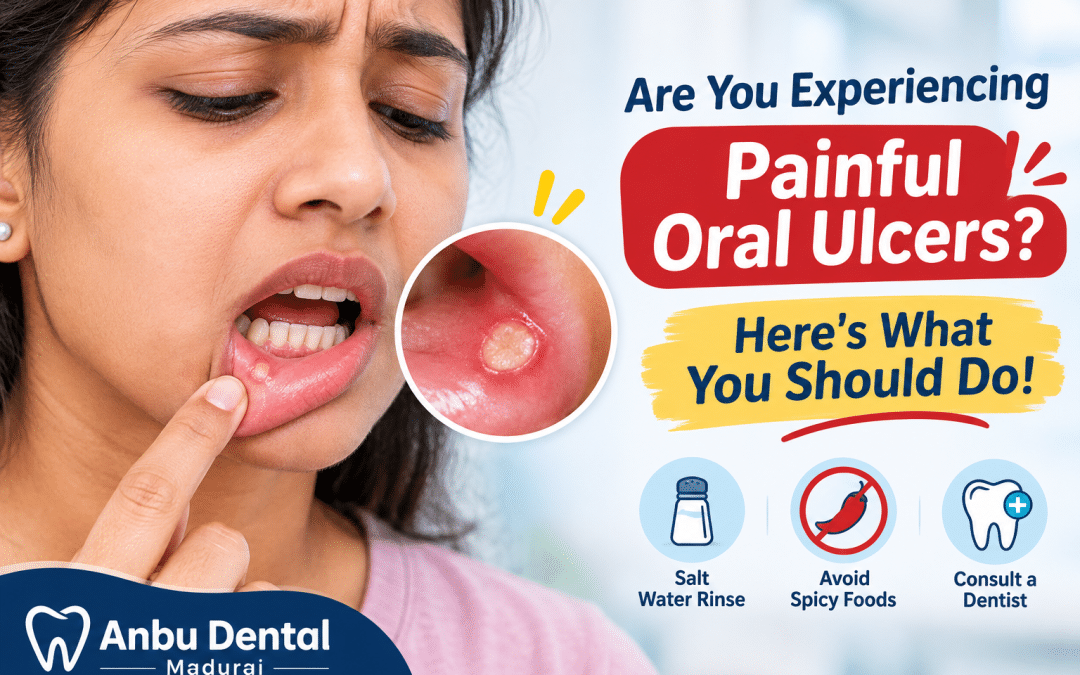
Have you ever experienced painful sores inside your mouth that make eating, drinking, or even speaking uncomfortable? These small but painful sores are commonly known as oral ulcers or mouth ulcers. They can develop on the tongue, inner cheeks, lips, gums, or the roof of the mouth.
Although most mouth ulcers heal on their own within one to two weeks, recurring or persistent ulcers should not be ignored. Understanding their causes and knowing how to manage them can help you get relief and maintain good oral health.
At Anbu Dental, Madurai, we believe that early identification and proper dental care are essential for maintaining a healthy mouth.
What Are Oral Ulcers?
Oral ulcers are small, painful sores that develop on the soft tissues inside your mouth. They may appear as round or oval-shaped wounds with a white or yellowish centre and a red border.
They are generally non-contagious and may cause discomfort while eating spicy foods, drinking hot beverages, brushing your teeth, or talking.
What Causes Oral Ulcers?
Several factors can contribute to the development of mouth ulcers. Some of the common causes include:
- Accidental Mouth Injuries
Biting your cheek or tongue, brushing too aggressively, or injuries caused by sharp teeth can lead to oral ulcers.
- Nutritional Deficiencies
A deficiency of essential nutrients such as vitamin B12, iron, folic acid, and zinc may contribute to recurrent mouth ulcers.
- Stress and Hormonal Changes
Physical stress, emotional stress, and hormonal fluctuations can trigger mouth ulcers in some individuals.
- Certain Foods
Spicy, acidic, and highly salty foods may trigger ulcers or worsen existing irritation.
- Poor Oral Hygiene
Inadequate oral hygiene can contribute to irritation and inflammation in the mouth.
- Medical Conditions
Certain medical conditions, including gastrointestinal disorders and immune-related conditions, may be associated with recurring oral ulcers.
What Should You Do When You Have Painful Oral Ulcers?
If you are experiencing mouth ulcers, these simple steps may help reduce discomfort and support healing.
- Rinse Your Mouth with Salt Water
Dissolve half a teaspoon of salt in a glass of lukewarm water. Gently rinse your mouth and spit it out. This may help keep the affected area clean.
- Avoid Spicy and Acidic Foods
Stay away from spicy, sour, salty, and acidic foods that can irritate the ulcer. Choose soft and mild foods until the ulcer heals.
- Maintain Proper Oral Hygiene
Brush gently using a soft-bristled toothbrush. Avoid irritating the affected area while brushing.
- Drink Plenty of Water
Stay hydrated throughout the day to prevent dry mouth and maintain oral comfort.
- Avoid Touching or Scratching the Ulcer
Do not repeatedly touch, bite, or scratch the affected area, as this may increase irritation.
- Consult a Dentist for Proper Treatment
If the ulcer is extremely painful, keeps recurring, or does not heal within two weeks, consult a dentist for proper evaluation and treatment.
When Should You Visit a Dentist?
While most common mouth ulcers heal naturally, certain symptoms require professional attention.
Visit your dentist if you experience:
- Mouth ulcers that last longer than two weeks.
- Frequent or recurring mouth ulcers.
- Severe pain that affects eating and drinking.
- Large ulcers or multiple sores appearing together.
- Bleeding or ulcers that become increasingly painful.
- Difficulty swallowing or persistent discomfort.
- Unexplained lumps or red or white patches inside the mouth.
A persistent mouth ulcer should be examined to rule out other underlying conditions, including oral cancer.
How Can You Prevent Oral Ulcers?
Following a few healthy habits can help reduce the risk of developing mouth ulcers.
- Brush twice daily with a soft-bristled toothbrush.
- Maintain good oral hygiene.
- Eat a balanced diet rich in vitamins and minerals.
- Avoid foods that trigger mouth irritation.
- Drink sufficient water.
- Manage stress and maintain healthy sleeping habits.
- Visit your dentist regularly for oral health check-ups.
How Does a Dentist Treat Oral Ulcers?
Treatment depends on the underlying cause and severity of the ulcer.
Your dentist may recommend:
- Topical medications to reduce pain and inflammation.
- Protective oral gels to reduce irritation.
- Medications to manage associated infections, when present.
- Investigations for nutritional deficiencies if ulcers keep recurring.
- Further evaluation or referral for persistent or suspicious ulcers.
Never self-medicate with antibiotics or apply harsh substances directly to mouth ulcers.
Conclusion
Oral ulcers may seem like a minor problem, but the pain and discomfort they cause can affect your everyday activities. Most ulcers heal naturally, but persistent and recurring ulcers need proper attention.
Don’t ignore painful mouth ulcers. Early diagnosis, good oral hygiene, and appropriate treatment can help protect your oral health.
Experiencing painful or recurring mouth ulcers?
Visit Anbu Dental, Madurai, for a professional dental consultation and appropriate guidance. Our dental team is committed to helping you maintain a healthy and comfortable smile.
Anbu Dental – Your Partner in Complete Oral Healthcare, Madurai.